
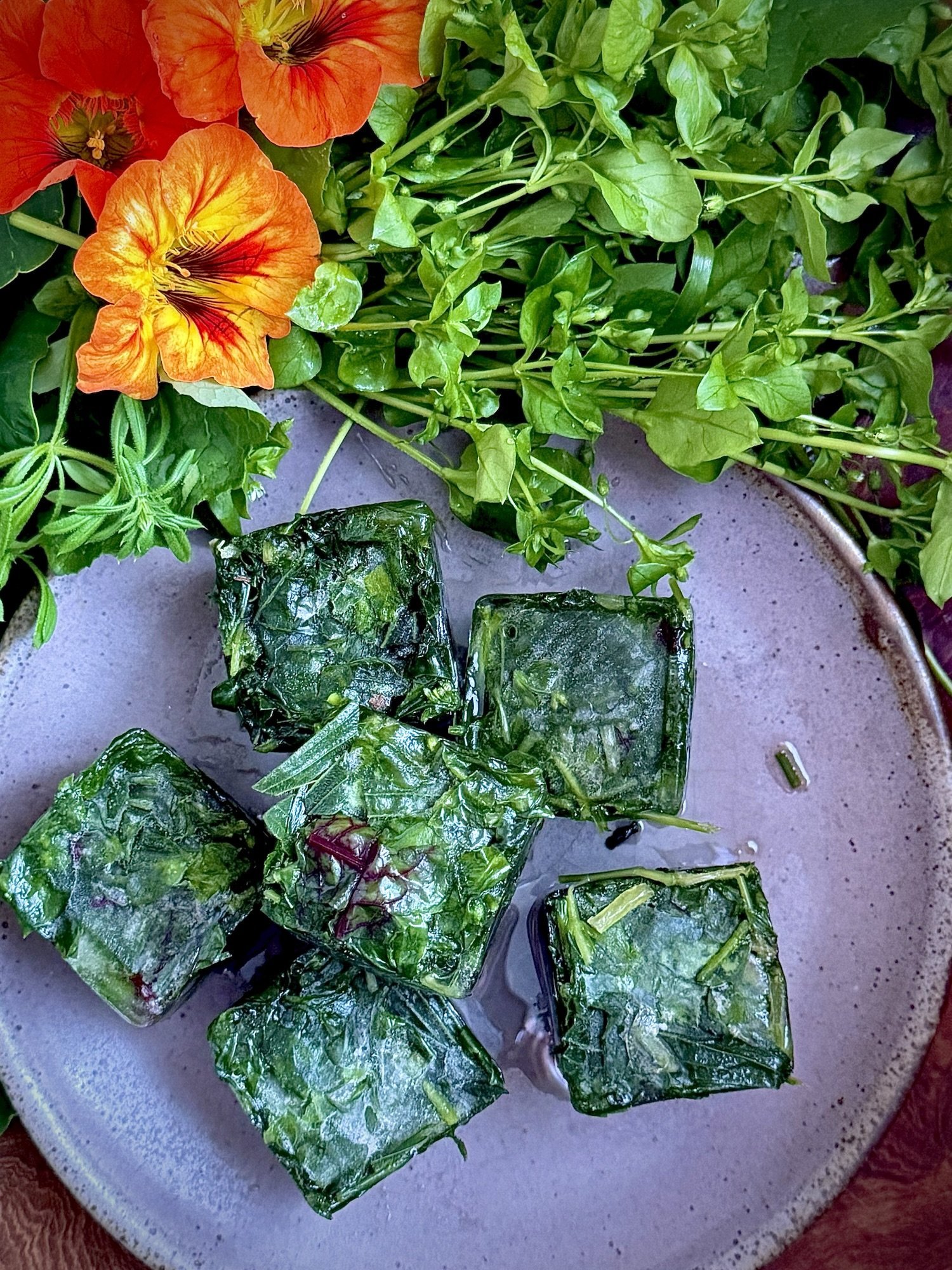
Every spring, before the heat sets in there is a flush of vibrant edible greensappears – dandelion, nettle, chickweed, cleavers … You will find them popping up in gardens, hedgerows, verges and paddocks, at their most tender before they toughen and flower. Turning them into smoothie cubes is an easy way to save some of the abundance for later in the year. I call the stash in the freezer my “eternal spring”!
Spring greens signal the seasonal transition. After months of roots, grains, preserves and slow-cooked meals these tender greens bring freshness, variety and valuable nutrients back to the table. Historically they filled the “hungry gap,” when winter stores were dwindling but new crops were not yet ready.
A seasonal tradition of renewal
Across several traditional healing systems, the shift from winter to spring is understood as a movement from rest, warmth and conservation towards upward growth, activity and renewal. Traditional Chinese Medicine describes winter as an inward, yin season, while spring marks the rise of yang energy, echoed in rising sap and new shoots pushing through the soil. Ayurveda also associates early spring with lingering Kapha heaviness and traditionally favours lighter foods with bitter, pungent and astringent flavours.
Earlier European humoral medicine also linked health with seasonal change, associating winter with phlegm and spring primarily with blood. Classic herbals, including Culpeper’s Complete Herbal (1653) and Gerard’s Herball (1597), document plants such as dandelion, nettle and cleavers. Spring staples gathered young, when they were tender, plentiful and at their best for use in the kitchen. Western spring tonics drew on this overlap between food and traditional medicine, a way to make use of the first edible growth of the season.
You can read more about the tradition of spring greens HERE.

Spring greens to look for
These plants typically emerge in early spring and have long had a place in the seasonal kitchen. Many, including dandelion, nettle and chickweed, appear in traditional spring cooking across cultures and continents, simply because they were the first fresh greens available.
- Dandelion (Taraxacum officinale): bitter and earthy; vitamin K, iron and manganese; traditionally used as a digestive bitter.
- Stinging Nettle (Urtica dioica): rich and spinach-like when cooked; calcium, iron and protein; traditionally used as a nourishing tonic.
- Chickweed (Stellaria media): mild and faintly sweet; vitamin C and antioxidant compounds; traditionally used to soothe skin.
- Wild spinach, or lamb’s quarters (Chenopodium album): mild and slightly nutty; vitamins A and C, calcium and iron; traditionally used as a digestive green.
- Watercress (Nasturtium officinale): sharp and peppery; vitamin C and antioxidant compounds; traditionally eaten as a spring green.
- Sorrel (Rumex acetosa): bright, lemony and tart; contains antioxidant compounds; traditionally used as a refreshing green.
- Violet leaves (Viola spp.): mild and gently green; contain vitamins; traditionally used in soothing herbal preparations.
- Cleavers (Galium aparine): grassy and slightly bitter; contains vitamin C; traditionally used as a spring tonic.
- Wild Garlic, or Ramsons (Allium ursinum): pungent and garlicky; contains vitamin C; traditionally eaten as a spring green.
- Bittercress (Cardamine hirsuta): sharp and peppery; a leafy source of vitamin C; traditionally eaten as a salad green.
- Miner’s Lettuce (Claytonia perfoliata): mild and slightly sweet; contains vitamin C; traditionally eaten as a fresh green.
- Plantain (Plantago major): mild and slightly bitter when young; contains fibre; traditionally used in skin-soothing preparations.
- Purslane (Portulaca oleracea): tangy and faintly lemony; contains omega-3 fatty acids and antioxidants; traditionally eaten as a cooling green.
- Yarrow (Achillea millefolium): aromatic and bitter; contains antioxidant compounds; traditionally used in digestive herbal preparations.
Caution
Correct identification is crucial, as some wild plants can be toxic. Only forage what you can positively identify with total confidence and steer clear of roadsides, sprayed verges and any other contaminated ground. Always cross-reference multiple sources when identifying plants you haven’t used before, and when in doubt, consult a qualified herbalist, botanist or a foraging expert before eating any wild plant.
You do not want to be this 43-year-old woman who mistook foxglove for sorrel and ended up in an emergency room with persistent vomiting and ECG abnormalities after making a green smoothie.
You can get further information in my guide to ethical and sustainable foraging.
Why freeze into cubes?
Freezing spring greens soon after harvest preserves much of their nutritional value, including antioxidant activity. Blending exposes the leaves to air, and some vitamin C may decline during storage, but minerals remain relatively stable. Use the whole cube, including any liquid released as it thaws, to keep the water-soluble nutrients in your food.
In the depths of winter you will love being able to drop these cubes into a smoothie when you are seeking some freshness.

Spring Greens Infusion Smoothie Cubes


Ingredients
- Fresh spring greens (e.g., dandelion leaves, nettle, chickweed, cleavers, etc.)
- Green tea (cooled)
Equipment
- Ice cube trays
- Sharp knife and cutting board
- Small spoon or spatula
- Freezer-safe storage bags or containers
Instructions
- Wash gently: rinse your greens in a bowl of cool water, swishing gently to dislodge soil and any hitchhiking insects. Lift the leaves out rather than pouring the water off, so grit settles to the bottom rather than washing back over the greens. Pat or spin dry.
- Chop finely: finely chop the greens on a clean cutting board using a sharp knife. Be gentle when chopping to avoid bruising the leaves, as bruising can cause them to lose flavour. A sharp knife is key here, dull blades crush delicate leaves rather than slicing them cleanly.
- Mix or separate: you can combine different greens together, or keep them separate in their own cubes if you'd rather build your smoothie flavour to taste later. A simple, balanced blend for beginners is roughly two parts mild greens (chickweed, violet leaf) to one part stronger, more bitter greens (dandelion, nettle).
- Pack the trays: spoon the chopped greens into the compartments of your ice cube trays, filling each about two-thirds full and pressing down gently to remove air pockets.
- Top with cooled green tea: pour cooled green tea over the greens in each compartment, filling almost to the top. Green tea adds its own polyphenols and acts as a gentle liquid base that helps the cubes hold together and slip easily out of the tray once frozen.
- Freeze: place the trays flat in the freezer for at least 4–6 hours, or overnight, until solid.
- Pop and store: once frozen solid, pop the cubes out and transfer them to labelled freezer-safe bags or containers. Press out excess air before sealing. Label with the greens used and the date.
- Storage life; for best flavour and nutrient retention, use within 4 - 6 months at a stable −18°C, though the cubes remain safe well beyond this window (up to a year).
- To use: drop 2–4 cubes straight into your morning smoothie, along with fruit, milk kefir, yoghurt, or a plant-based milk of your choice. There's no need to thaw first, the blender will do the work!
Leave a Reply