
Almost vertical mountain slopes, unpredictable weather, and abundant wildlife are just some of the factors that make establishing a productive garden in nipaluna | Hobart challenging. Walk with me through four vegetable gardens, thriving in their mountainous homes and providing abundant food for their creators and communities. There is plenty of inspiration for home gardeners and budding market gardeners alike.
The Home Harvest Tour, curated by Hannah Maloney, permaculture designer and educator behind Good Life Permaculture, showcases local, sustainable, and regenerative gardening practices. With a deep commitment to permaculture and holistic living, Hannah carefully selects gardens that embody these principles, giving the public a firsthand look at how permaculture can transform landscapes into productive, environmentally harmonious spaces.
Meika’s garden ~ Mountain Nest

Located at the base of kunanyi | Mount Wellington, Meika established her garden eight years ago, creating a bountiful sanctuary that nourishes her family. Surplus produce feeds her community through a roadside stall. She aims to evolve the garden into a closed-loop, biodiverse system that fosters soil health and biodiversity.
Mountain Nest is a sprawling garden. “It just keeps growing,” Meika says with a mix of pride and awe. The garden features vegetable beds bursting with colourful produce, a polytunnel nurturing seedlings and heat-loving plants, and both open and covered orchards boasting a staggering array of trees.
The sheer diversity of fruits and vegetables is inspiring. You will find your most common veggies alongside local heirloom varieties and a vast array of flowering herbs to attract pollinators. Although Meike does most of the work, she also has some help from a semi-regular garden group. These gatherings bring together a mix of locals, from seasoned green thumbs to curious novices, all united by their love of growing food, sharing knowledge, and cultivating community.

Medicinal herbs burst from every available space in the garden, their aromatic leaves and vibrant flowers create a living apothecary, providing Mieke with an endless supply of teas. There are plenty of cosy nooks to enjoy a cuppa and take in spectacular views of kunanyi | Mount Wellington on one side and the river Derwent on the other.
Twenty beehives dot the property’s boundary. The buzzing of the industrious pollinators fills your ears. This is Meika’s son’s project, a small-scale honey business—Nature’s Nectar. On our visit, deep-amber untreated bush and leatherwood honey were on offer. Both varieties reflect their terroir: the bush honey carries notes of eucalyptus and native flora, while the leatherwood is robust in flavour, a taste of Tasmania’s ancient forests.

The garden reflects Meika’s philosophy of holistic well-being. Health is cultivated not just through growing nutritious food but through connection with nature and community. Mountain Nest is a garden with a heart, and it gives generously.

Rob’s garden
Rob’s garden, though just five months old, is already a testament to thoughtful design and ambitious vision. Nestled on a north-facing slope in the foothills of kunanyi | Mount Wellington, the plot basks in optimal sunlight. The gentle incline also supports optimal drainage. Productivity, sustenance, and profit are the driving forces of this garden.
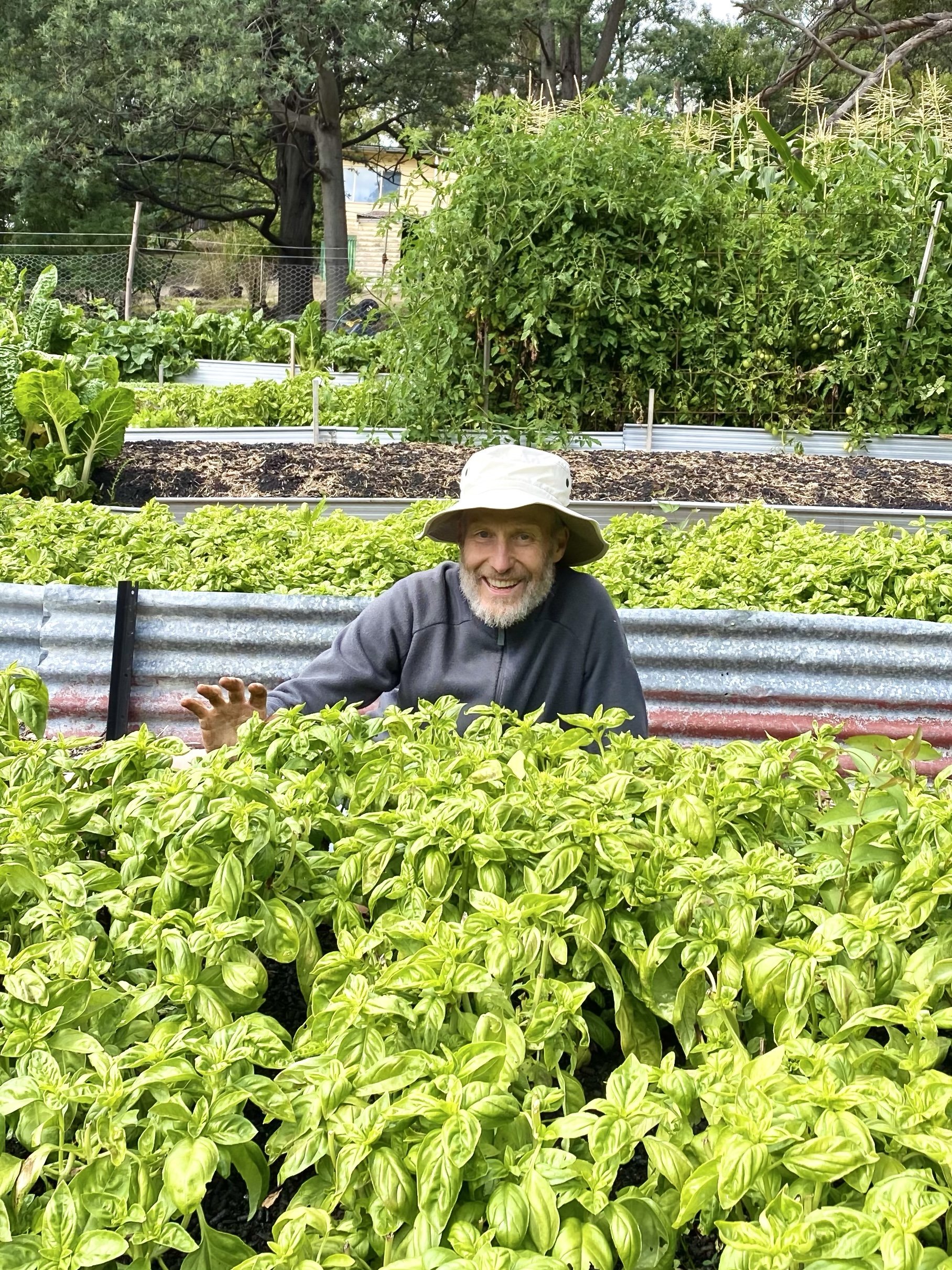
The foundation of each bed begins with a single sheet of corrugated iron anchored firmly into the slope’s lower side using robust stakes. This creates a retaining wall that prevents soil erosion and maximises the usable planting area.
Rob’s soil-building technique truly showcases his commitment to sustainability and circular gardening practices. Instead of discarding spent plants at the end of their lifecycle, he repurposes them, laying them directly back into the beds where they decompose, releasing nutrients into the soil and feeding the next generation of crops. They also improve soil structure, enhancing its ability to retain moisture while remaining well-aerated – conditions that plant roots thrive in. Rob then adds a generous layer of organic compost sourced from the local tip on top of the spent plant layer. The compost is a nutrient-rich blanket, suppressing weed growth and hastening decomposition while providing an ideal growing medium for new plants.

On the day we are there, the beds are bursting with summer vegetables and herbs, including tall stands of corn, tomatoes and masses of bright, healthy basil.
Rob has achieved an impressive feat: recouping the garden’s entire start-up cost in a mere five months! He’s tapped into a growing appetite for fresh, locally sourced produce by forging relationships with local providores.
Rob does not lose sight of the juxtaposition of his cultivated market garden and untamed wilderness. He acknowledges the ever-present fire risk inherent in such a location with characteristic pragmatism. Yet, rather than viewing this potential threat as a deterrent, Rob sees it as another challenge to be met with resilience and forward-thinking. He is confident he can swiftly bring his garden back to life in the aftermath of a fire.
This garden’s simplicity and thoughtful construction made a real impression on us. It is a spare garden that is a powerful example of site-responsive agriculture.
Outside The Box
Perched near the summit of Mount Nelson, a remarkable garden flourishes under the stewardship of Outside the Box | Earth Arts Rights. This innovative not-for-profit organization is a living embodiment of their mission to “connect, amplify, nurture and support people working at the intersection of environmental protection, the arts and social justice.”

With wildlife at every turn, this very productive garden’s design protects against intrusion. A series of water-wise wicking beds are topped with cages to shield tender plants from pademelons and other wildlife. The beds exemplify how conservation and cultivation can coexist, with every drop of water thoughtfully managed to nurture growth. Extending beyond the beds, fenced and netted areas create sanctuaries for fruits and vegetables.

Glasshouses dot the garden, serving as year-round havens for food plants. These structures not only protect against wildlife intrusion but also extend the growing season well into the colder months. Inside, a microclimate flourishes, allowing for the cultivation of more delicate species that might otherwise struggle in Tasmania.
Also impressive is the garden’s commitment to closed-loop systems. Efficient composting, including thriving worm farms, transforms waste into nutrient amendments for the soil. The cyclical approach mirroring natural ecosystems.

Outside the Box is a living laboratory where environmental stewardship, artistic expression, and social consciousness converge. Each carefully tended plot and protected area tells a story of balance – between human needs and wildlife preservation, water conservation and abundant growth, and artistic vision and practical functionality.
Goodlife Permaculture
Many of you will be familiar with the thriving and diverse Goodlife Permaculture garden via Gardening Australia and social media. Hannah and her family’s garden is a practical and soulful response to living on a dramatic slope.

The garden’s innovative terracing system is its backbone, providing a series of stable platforms for multiple purposes. The terraces offer more than just sturdy footholds on the precarious incline – they create a cascading series of microclimates and growing spaces, each tailored to specific plants and purposes. The long, terraced vegetable beds are a perfect runway for a mobile chicken coop or “chook tractor.” This system allows the family’s feathered helpers to renovate and fertilise spent beds, embodying the permaculture principle of stacking functions.
Nestled into the banks, cold frames extend the growing season, while strategically placed compost bays turn waste into wealth, their heat gently warming nearby plants.

Vertical surfaces burst with productive climbers such as hops and espaliered fruit trees. This three-dimensional approach to gardening maximises every square inch of space, turning potential limitations into opportunities for abundance.
The garden is a vibrant showcase of permaculture principles in action. Each element serves multiple functions, and each function is supported by multiple elements, creating a resilient, self-sustaining system. Water is carefully managed, flowing from high points to low, nourishing plants along the way. Biodiversity flourishes, with a mix of annual and perennial plants supporting a rich ecosystem of beneficial insects, birds, and microorganisms.

The reward for tackling such challenging terrain is the breathtaking panorama of Hobart City and the Derwent River. This spectacular view is not just a joy for human eyes; it’s a bonus for all the garden’s inhabitants, from the industrious bees and free-ranging chickens to the mailing goats with their own “viewing platform”!
Hannah’s garden is a living embodiment of permaculture ethics: care for the earth, care for people and fair share. By organizing events like Home Harvest, they’re not just sharing their bounty but also sowing seeds of inspiration in the community.

Mountainside gardening
These gardens, rooted in the mountainside, serve a purpose beyond just being productive spaces. They are beacons of possibility, showing what vision, hard work, and a deep understanding of natural systems can achieve. They challenge us to rethink our relationship with the land, even in urban settings, and provide a roadmap for creating abundant, sustainable living spaces that nourish people, the environment, businesses, and communities.

Hi Kitchen Apothecary – I am wondering if Mieka, Rob or Hannah would like to do an interview for my Healing and Wellbeing quarterly magazine? The October issue relates predominately to wellness opportunities on and around kunanyi. As well as the interviews I already have with wellness operators and guides, I would love to write an article on the flourishing organic veggie garden in Spring. The magazine is available to all police officers and paramedics and also goes to my reiki clients, reiki tribe, and many holistic therapists including acupuncturists, qigong masters, herbalists, yoga teachers and students (the list goes on). I would really love to showcase your fantastic thriving veggie gardens and promote your site if you would be amenable. Noting this is a free of charge interview – I coordinate my quarterly magazine as an educational tool and community resource. Best wishes to you and look forward to hearing from you, Kind regards, Suzanne (Reiki Energy for Life, Battery Point).
Hi Suzanne, I wrote this post in response to my experience of the Home Harvest tour set up by Hannah Maloney at goodlifepermaculture.com.au – you should get in contact with her to secure the contact details of the owners of the featured gardens