
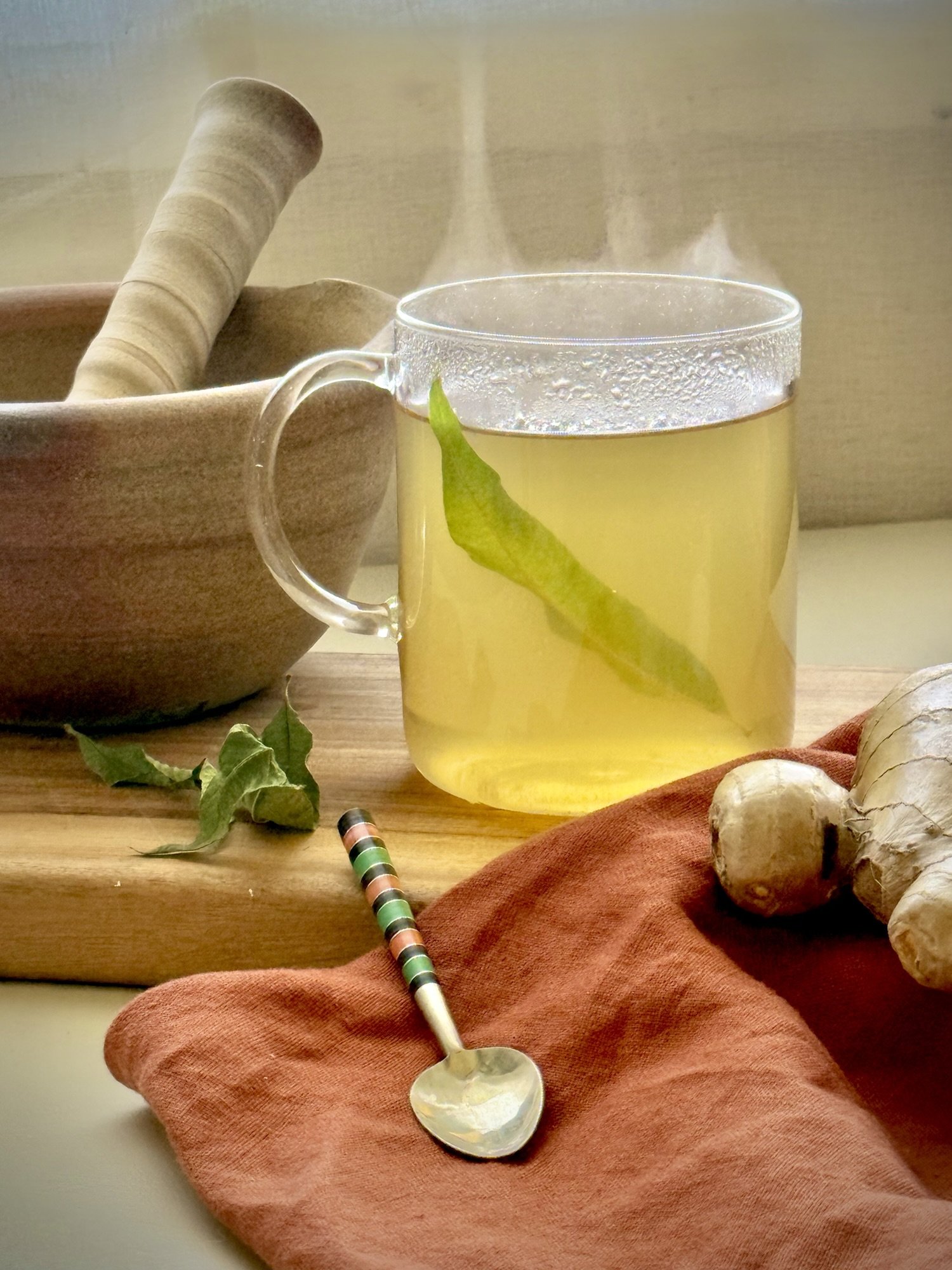
For centuries, a small pinch of seeds chewed after a meal or prepared in a tea has been a go to remedy to ensure digestive comfort. This simple spice seed and ginger tea draws on the same kitchen wisdom we explored in Your Guide to Kitchen Carminatives. Fennel, caraway, star anise and ginger are central to the brew and have long been valued as gentle remedies for bloating and wind.

Why these ingredients together?
Together, these ingredients cover a wide constitutional range, making the blend a good all-rounder.
Fennel seed (Foeniculum vulgare) is sweet and anise-like. Avicenna, in the Canon of Medicine (Persia, c. 1025) described fennel as “useful in cases of nausea and burning sensation in the stomach,” framing it as warming and drying in energetic terms. Its warming, gut muscle-relaxing action comes largely from its aromatic essential oils, particularly anethole, the same compound responsible for its distinctive liquorice-like scent.
Caraway seed (Carum carvi) is earthier and more peppery, with a long European tradition behind it, including Hildegard’s von Bingen’s advice in Physica (England, c. 1155) to “chew it calmly after breakfast” as a preventative digestive habit rather than a reactive remedy. It pairs beautifully with fennel’s sweetness, rounding out the tea with a slightly savoury depth.
Star anise (Illicium verum) brings a bold, licorice-sweet warmth and a distinctly warming quality. It’s carminitive qualities. In traditional Asian medicine systems like TCM and Ayurveda, Illicium verum (star anise) is valued as a warming herb that stimulates digestion. Valued in Traditional Chinese medicine as it dispels “stomach cold”, and regulates the flow of “digestive Qi” to quickly soothe pain, bloating, and nausea.
Fresh ginger adds a warming lift and is one of the most reliable all-rounders in the carminative world, easing fullness as much as nausea. A few thin slices deepen the tea’s warmth and give it a lovely, gently spicy finish.
Note on reflux: if you have reflux, note that this blend is fennel and ginger based rather than peppermint-forward, so it’s generally better tolerated than a straight peppermint tea which can be aggravaitng.
Digestive Seed Tea

Ingredients
- ½ teaspoon fennel seed
- ¼ teaspoon caraway seed
- 1 star anise pod
- A few thin slices of fresh ginger, about a 2cm piece (optional)
- ½ teaspoon honey (optional)
Instructions
- Lightly bruise the seeds to crack their outer coating and release the aromatic oils inside in a mortar and pestle. A rolling pin over a folded tea towel, the flat side of a knife, or the base of a sturdy glass all work well if you don't have a mortar and pestle.
- Peel and thinly slice the fresh ginger. Place the bruised seeds and ginger slices into a cup infuser or small teapot.
- Pour over just-boiled water, cover, and steep for 8 to 10 minutes. Covering the cup matters here, since it stops the volatile aromatic oils from simply evaporating away with the steam.
- Strain well and sip slowly, ideally in the 20 to 30 minutes after a meal.
Notes
A word of caution
This tea is intended for occasional, mild bloating and wind, not for persistent pain, ongoing bowel changes or symptoms that concern you, seek medical attention.
And finally …
If you would like to explore more recipes that support digestion and gut health try:
► Anti-Nausea Ginger & Coconut Water Icy Poles
Read more about aromatic digestive AKA carminative herbs and spices:
► Your Guide to Kitchen Carminatives: Gut-Soothing Herbs and Spices
Leave a Reply